Water Quality Monitoring

- an on-line analyzer for the monitoring of drinking water (potable water) and wastewater and process chemical analysis.

HomeProductsApplicationsRepresentativesInvestor RelationsTrade ShowsEmploymentCustomer RelationsContact


 Tytronics - Spectrophotometer


ON-LINE ANALYSIS AND WATER MONITORING

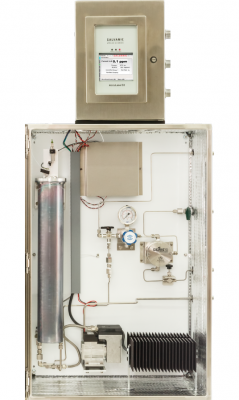
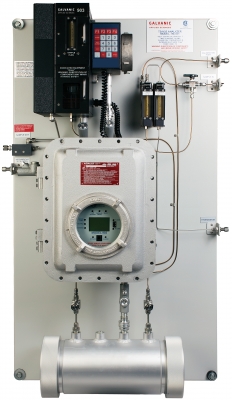
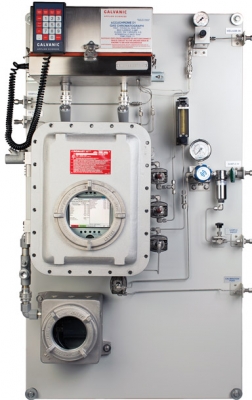
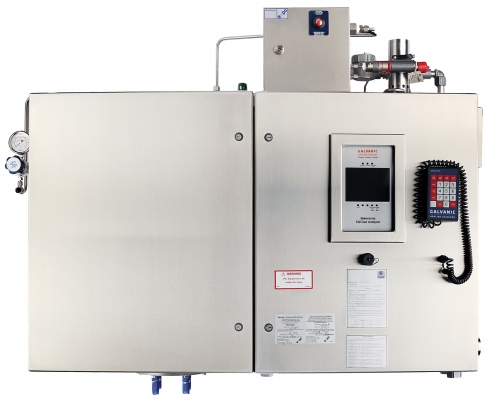
The Tytronics® Sentinel is the first on-line analyzer capable of both process chemical analysis and the monitoring of drinking water (potable water) and wastewater. Offering an unmatched performance to-price ratio, the Tytronics® Sentinel provides measurement qualities and accuracies simply not seen before. There is built-in reliability, thanks to a simple and patented sample capture system and wide-bore tubing. This is an analyzer that can handle difficult and dirty samples.

Whether you are currently analyzing or monitoring liquids, or looking to do so, the Tytronics® Sentinel is your first choice in on-line analysis or monitoring.

EASE OF OPERATION

Simple menu-driven operation and a modular design make the Tytronics® Sentinel easy to use and maintain. A person with little chemical background can use the analyzer with minimal training. Simple step by step instructions are displayed to guide the operator through the procedure to complete a calibration and to set the unit in the automatic analysis mode.

THE BEST METHODOLOGY FOR THE APPLICATION

One of the keys to Tytronics® leadership in on-line analysis is the commitment to provide the best possible methodology (colorimetry, ISE, colorimetric or potentiometric titrations) for the application at hand. Thus, you can be assured that your measurements of acids, ammonia, bases, metals, nitrate, phosphate, etc., are done in the very best way.

All parameters in the Tytronics® Sentinel are user programmable. Multiple analysis methods can be configured to tackle different concentration ranges. Multiple calibration setups can be used to define different low and high-range calibration curves. A cleaning cycle can be programmed to clean out or dissolve any buildup on the measurement sensor or reaction cell. Analysis, calibration and cleaning cycles can be executed at periodic (user-programmable) intervals to provide handsfree automation of the analyzer.

UNIQUE BATCH SAMPLING CAPTURE TECHNIQUE

The Tytronics® patented sample capture technique is incorporated into the Tytronics® Sentinel. This means of sample capture provides the simplest and most reliable method of capturing a reproducible volume of sample that is available. The sample inlet uses 1/4" tubing, thus minimizing blockages and allowing even high turbidity samples to be readily handled.

The sample inlet system uses an internal fast loop ensuring that a fresh and representative sample is always available for analysis. Sample capture volume can range from 5 to 30 ml. This allows the Tytronics® Sentinel to be used for ppb as well as ppm levels of measurement.

Mixing is accomplished through the use of a magnetic Teflon™ coated stir bar. Two types of measurement sensors, colorimetric and potentiometric, can be mounted in the reaction cell.

Peristaltic pumps are used to introduce calibrating and cleaning solutions. Reagents are introduced through high precision positive displacement piston pumps which require minimum maintenance.

APPLICATIONS

  • Acids

  • Alkalinity

  • Aluminum

  • Ammonia

  • Caustic & Carbonate

  • Chlorine

  • Chrome

  • Color

  • Copper

  • Fluoride

  • Hardness

  • Hardness in Brine

  • Iron

  • Manganese

  • Nickel

  • Nitrate

  • Nitrite

  • Peroxide

  • Phosphate

  • Silver

  • Sulfide

  • Zinc

  • ... and many more...

SAMPLING OF TYTRONICS® SENTINEL ANALYSIS METHODOLOGIES

Acids

Titration

Varies

Potentiometric titration; various acids

Alkalinity

Titration

Varies

Colorimetric titration for total alkalinity and potentiometric for P and M values

Aluminum

Colorimetric

0 to 100 ppb to 0 to 2 ppm

Lower levels measured on potable water

Ammonia

Colorimetric

0 to 100 ppb to 0 to 25 ppm

Uses the modified Berthelot method

Ammonia

ISE

0 to 100 ppb to 0 to 100 ppm

Direct or using SKA method

Caustic & Carbonate

Titration

Varies

Caustic scrubber

Chlorine

Colorimetric

0 to 500 ppb to 0 to 3 ppm

Free and/or total available chlorine may be measured

Color

Direct Spectrometry

0 to 10 to 0 to 500 Hazen

Hazen or APHA color units

Copper

Colorimetric

0 to 500 ppb to 0 to 3 ppm

Lower levels for potable water, higher levels usually on industrial waste streams

Cyanide

Colorimetric

0 to 200 ppb to 0 to 1 ppm

Used on purified waste water streams

Cyanide

ISE

0.5 ppm and higher

Waste water streams

Fluoride

ISE

0 to 2 ppm and higher

Potable water using SKA technique

Hardness

Colorimetric

0 to 1 ppm to 0 to 10 ppm

Hardness in water or brine

Hardness

Titration

0 to 20 to 0 to 500 ppm

Complexometric colorometric titration

Iron

Colorimetric

0 to 100 ppb to 0 to 2 ppm

Potable water

Manganese

Colorimetric

0 to 200 ppb

Potable water

Nitrate

ISE

0 to 10 ppm to 0 to 100 ppm

Direct or SKA method used

Nitrate

Direct UV Spectrometry

0 to 1000 ppm

Consult factory for suitability

Nitrite

Colorimetric

0 to 1 ppm

Potable water derived from deep wells

Phosphate

Colorimetric

0 to 500 ppb to 0 to 3 ppm

Used for corrosion prevention in potable, cooling tower and boiler water supplies

Phosphate

Colorimetric

0 to 10 ppm and higher

Mainly used on waste water streams

And many more ...

Click here for the complete brochure
on the Tytronics Sentinel
(PDF - 1.44 MB)


All information & content on this web site is © Galvanic Applied Sciences, 2000. All rights reserved.